Apr 17, 2026

-

Maintenance

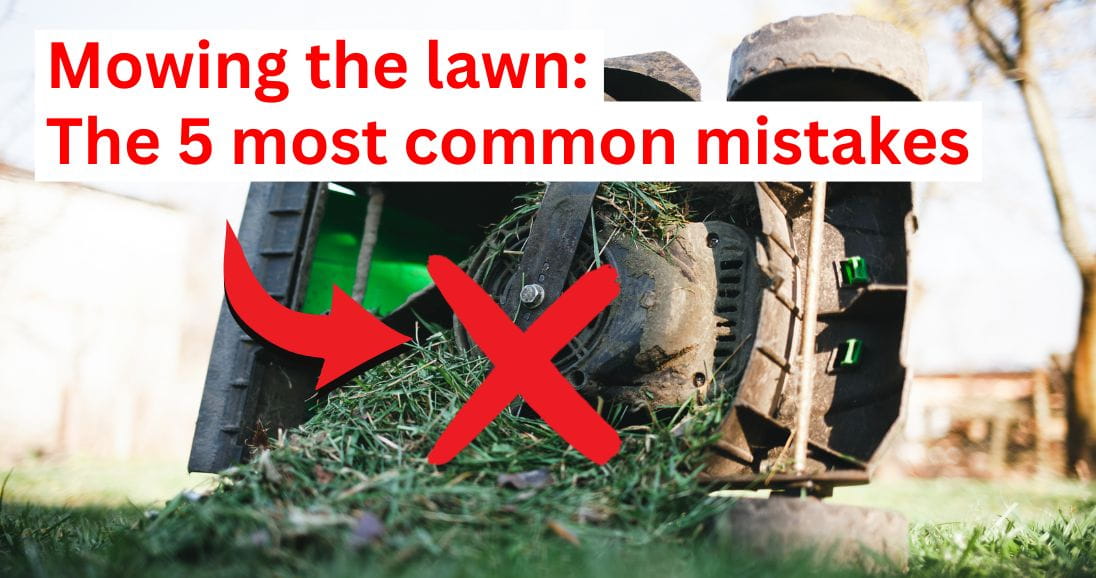
Mowing the lawn: The 5 most common mistakes and how to avoid them

So, how do you mow the lawn properly? A perfect lawn starts with the right mowing technique but small mistakes can quickly ruin your green carpet. Whether it's cutting too short, mowing at the wrong time, or using dull blades, these errors can cause lasting damage. To help you get it right, we've summarized the 5 most common mowing mistakes and how to avoid them. Let's turn your garden into an eye-catcher, without the stress!

Mowing lawns - 5 common mistakes

Mistake #1: Scalping - When you mow too short

During hot summer days, you might think: "The shorter I mow, the longer I'll have peace." A common misconception! After cutting too short, your lawn quickly becomes unsightly and develops brown spots.

Your lawn needs its grass blades for photosynthesis to produce energy. If you mow too short, you weaken it permanently. The result: The weakened lawn offers ideal conditions for weeds, which quickly take over bare patches.

The optimal cutting height is 1.5–2 inches in summer and 1–1.5 inches in spring and fall. If the heat persists, leave a little more length. This protects the soil from drying out.

The most important points:

  • ✅ Optimal cutting height: 1.5–2 inches in summer, 1–1.5 inches in spring and fall
  • ✅ Cutting too short leads to lack of energy and dehydration
  • ✅ Measure the actual cutting height of your mower with a ruler
  • ✅ Short grass blades offer no protection from the sun and increases risk of dehydration
  • ✅ Use the Homerockr app reminder for season-appropriate cutting height
Jetzt Aufräumplan erstellen
Eigene Checkliste erstellen
Mowing lawns - brown spots
Bei Amazon ansehen
Bei Amazon ansehen

Mistake #2: Timing Is Everything — Mowing at the wrong time

Timing is crucial when mowing the lawn and mistakes regularly happen here that damage your green carpet.

Mowing the lawn after rain

A classic problem: It's just stopped raining, the sun comes out, and you think: "Perfect, let me mow quickly!" But be careful, mowing the lawn when wet is a recipe for disaster.

Wet grass and lawnmowers don't mix well. The wet grass clogs your mower, the blades get squeezed instead of cut cleanly, and your lawn ends up looking ragged and uneven. Your mower also leaves deep tracks in the softened soil that remain visible for weeks.

After a rain shower, wait at least 4–6 hours or ideally until the next day before mowing. Your patience will be rewarded with a clean cut and a healthy lawn.

Why mowing the lawn when wet is a bad idea

Beyond the clogging problem, mowing the lawn when wet causes several other issues:

  • Uneven cuts: Wet grass blades bend under the mower instead of standing upright, resulting in a torn, uneven appearance.
  • Clumping: Moisture causes clippings to clump together, leaving unsightly patches on your lawn.
  • Soil compaction: Mowing the lawn after rain compacts the softened soil, damaging the root system.
  • Disease spread: Wet conditions make it easier for fungal diseases to spread across your lawn.

If you absolutely must mow after rain, at least wait until the grass blades have dried on the surface — even if the soil is still damp.

When is the best time to mow the lawn?

The best time to mow the lawn is late morning or early afternoon, ideally between 10 a.m. and 2 p.m. By then, the morning dew has evaporated, but the midday heat hasn't reached its peak yet.

Avoid mowing in the blazing afternoon sun cause it stresses both your lawn and yourself. Also, never mow in the early morning when the grass is still wet from dew. This leads to the same problems as mowing after rain.

How long is the mowing season?

Many amateur gardeners mow too late into the season or stop too early. As a rule of thumb:

  • • Start: When grass reaches around 3–4 inches in spring.
  • • End: Make your last cut before the first frost arrives.

The most important points:

  • ✅ Never mow wet lawns, wait at least 4–6 hours after rain
  • ✅ The best time to mow the lawn is late morning or early afternoon
  • ✅ Make lawns winter-proof: Do not mow too short before winter (approx. 2 inches)
Homerockr kostenlos testen:
Laden im App StoreLaden im Google Play Store
Mowing the lawn - sharp blade

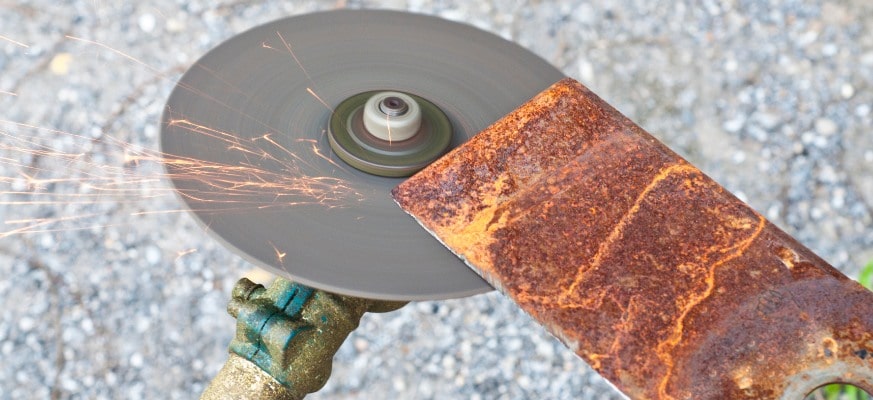
A lawnmower blade is also easy to sharpen with an angle grinder.

Free Checklist

Mistake #3: Dull Blades — A Cutting Problem

One underrated mistake when mowing the lawn is neglecting your mower blades. Dull blades tear and squeeze the grass blades instead of cutting them cleanly. The result: A lawn with frayed tips that quickly turn brown and make your green carpet more susceptible to disease.

The warning signs of dull blades are clearly visible: If your lawn looks uneven after mowing, individual grass blades remain standing, or the cut tips look frayed, it's high time to sharpen. Increased effort or unusual motor noises when mowing are also clear signs.

As a rule of thumb, you should sharpen the blades every 20–25 mowing hours or at least once per season. For larger areas or if you frequently run over stones, more frequent sharpening is necessary.

You can sharpen the blades yourself or have a specialist do it. For the DIY version, you need a file or an angle grinder. A practical tip: Mark the side you've already sharpened with a marker so you don't get confused.

Important: Always disconnect the spark plug or remove the battery before sharpening! Safety comes first.

The most important points:

  • ✅ Dull blades lead to frayed cuts and browning
  • ✅ Signs: Uneven cutting pattern, increased effort when mowing
  • ✅ Sharpen every 20–25 mowing hours or at least once per season
  • ✅ Always prioritize safety when sharpening (disconnect power supply!)
  • ✅ Keep a replacement blade set ready for quick changes
  • ✅ Use the Homerockr app reminder for timely blade sharpening

💡 Lawn care? Homerockr reminds you of that.

Effortlessly organize home maintenance, renovations, and small to-dos with the Homerockr app. Stay on top of everything before minor tasks turn into major costs.

Infos zur Homerockr-App
Wartungsplan anlegen
Laden im App StoreLaden im Google Play Store
Homerockr App

Mistake #4: The Clippings Mistake — Mishandling Lawn Waste

One of the most common mistakes garden owners make is mishandling lawn clippings. After mowing, you're faced with a decision: leave them, collect them, or mulch? The correct answer depends on various factors and has a direct impact on the health of your lawn.

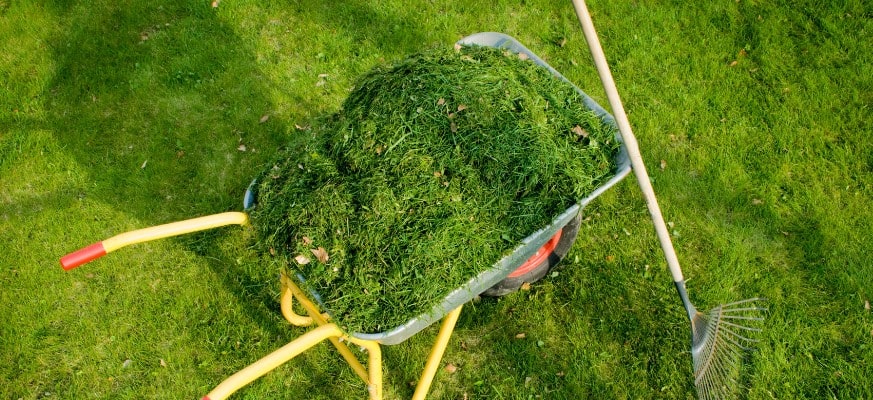
Leaving clippings behind indiscriminately is a classic beginner mistake. Especially with longer grass, this creates layers of thatch that can "suffocate" your lawn. These layers prevent water, air, and nutrients from reaching the soil properly. Dense thatch buildup leads to moss growth and promotes disease which is exactly the opposite of what you want to achieve with your lawn care.

The optimal solution depends heavily on the season and the amount of clippings. As a rule of thumb: When quantities are small, you can leave the clippings, provided they are finely shredded. A lawnmower with a mulching function is worth its weight in gold here, as it cuts the grass so finely that it rots quickly and acts as a natural fertilizer. However, for larger quantities, you should always remove the clippings to avoid thatch buildup.

The most important points:

  • ✅ You can leave short grass clippings (max. 1/3 of the blade length) as mulch
  • ✅ Always remove long clippings to avoid thatch buildup
  • ✅ Mulch only on dry lawn — never on wet grass
  • ✅ Compost your lawn clippings for valuable humus
  • ✅ Lawn clippings are ideal as mulch for flower beds
Mowing the lawn - cutting the lawn

Mistake #5: The Noise Offender — Ignoring Local Noise Ordinances

Mowing the lawn can be a sensitive issue especially when it comes to timing. A classic example: Mowing the lawn early Sunday morning. Sure, on weekends you finally have time to get the yard in shape. But be careful! Many neighborhoods and municipalities have noise ordinances, and firing up your mower at the wrong time can land you a fine or worse, am amgry neighbour.

What rules actually exist?

Local noise ordinances: Some cities have specific rules about when you can use power equipment. For example:

  • • Los Angeles: Gas-powered equipment allowed 8 a.m.–8 p.m. (weekdays), 9 a.m.–8 p.m. (weekends)
  • • New York City: Power tools restricted before 8 a.m. and after 7 p.m.
  • • Many suburbs: No specific rules, but general noise complaints can be filed

HOA rules: If you live in a neighborhood with a Homeowners Association, check your CC&Rs (Covenants, Conditions & Restrictions). HOAs often have stricter rules than local laws and can fine you for violations.

Common courtesy guidelines

Even where there are no laws, being a good neighbor matters:

  • • Weekday mornings: Wait until at least 8 a.m. before mowing
  • • Weekends: 9 a.m. is a safer bet — let your neighbors sleep in
  • • Evenings: Wrap up by 8 p.m., earlier if you have close neighbors
  • • Holidays: Use common sense, mowing during a backyard BBQ next door won't win you friends

💡Pro tip: If you're unsure, a quick "Hey, does it bother you when I mow early?" goes a long way with neighbors.

The most important points:

  • ✅ Check your local noise ordinances. Some cities have specific rules
  • ✅ Review your HOA rules if applicable. They're often stricter than city laws
  • ✅ General courtesy: Avoid mowing before 8 a.m. or after 8 p.m.
  • ✅ Electric and robotic mowers are quieter but courtesy still applies
  • ✅ When in doubt, talk to your neighbors
Mowing the lawn - neighbor

The Robotic Lawnmower Myth — Leaving Everything to Technology

Robotic lawnmowers are real helpers in the yard as smart home gadgets, but they also need a bit of attention to really keep your lawn in top shape. A common mistake: Just letting the robot do its thing without checking the settings or preparing the lawn properly.

For example, make sure the cutting height of your robotic lawnmower is set correctly. Too low leads to the same problems as with a manual mower: brown spots and weakened turf. You should also regularly check whether the blades are still sharp. Dull blades squeeze the grass blades and leave an unclean cut here too.

Another point: The boundary wire. If it's not laid correctly, the robot may miss important areas or  even worse, damage flower beds and other sensitive zones.

And remember: Robotic lawnmowers are not miracle machines. Although they regularly remove small amounts of clippings, you should manually mow the lawn to the right height beforehand if there's heavy growth or after long breaks. This prevents the robotic lawnmower from being overwhelmed or delivering poor results.

The most important points:

  • ✅ Check cutting height: The same applies to robotic lawnmowers — don't cut too short (1.5–2 inches)
  • ✅ Maintain blades: Check blade sharpness regularly
  • ✅ Check the boundary wire: Install correctly to avoid missed areas
  • ✅ Do preparatory work: If grass is too tall, mow manually first
  • ✅ Plan mowing times: Be considerate of neighbors even with quiet robotic mowers

Extra Tip 2: Encouraging Beneficial Insects Against Slugs and Snails

Slugs and snails love moist lawns especially when grass clippings are left behind. Instead of reaching for chemicals, it helps to promote natural predators such as birds, toads, or ground beetles. Brush piles and leaf litter at the edge of your lawn provide shelter for these helpful creatures and make your yard a slug-free zone, completely without chemicals.

Mowing lawns - maintenance
Profilfoto

Author

Carsten Bohling

Carsten is a true DIY enthusiast who founded Homerockr in 2023 with a clear mission: to provide homeowners with deep expertise on everything related to their four walls. Here on the blog, he covers the full spectrum of homeownership, from essential maintenance and modern renovations to smart home solutions.

He dives deep into research to provide the Homerockr community with detailed, practical insights. When he’s not writing, he’s usually busy with his own DIY projects, where he’s often joined by his two sons.

If you have any questions or feedback, feel free to drop us a line at team@homerockr.com.

Want to stay on top of all your home maintenance tasks without the stress? Then sign up for the Homerockr app today and keep your home in perfect shape.

Homerockr – Never lose track of your home maintenance again!

Homerockr App
Laden im App StoreLaden im Google Play Store

Frequently Asked Questions

01.

Can you mow the lawn when it is wet?

No. Wet grass bends instead of cutting cleanly, clogs your mower, and leaves tracks in soft soil. Wait at least 4–6 hours after rain.

02.

What is the best time to mow the lawn?

Late morning to early afternoon (10 a.m.–2 p.m.) — after the dew dries but before peak heat.

03.

How often should you mow the lawn?

Once a week during peak growth, every 10–14 days in summer. Never cut more than one-third of the blade length at once.